
Central Civic Ward
CENTRAL CIVIC WARD
The Marble · The Courts
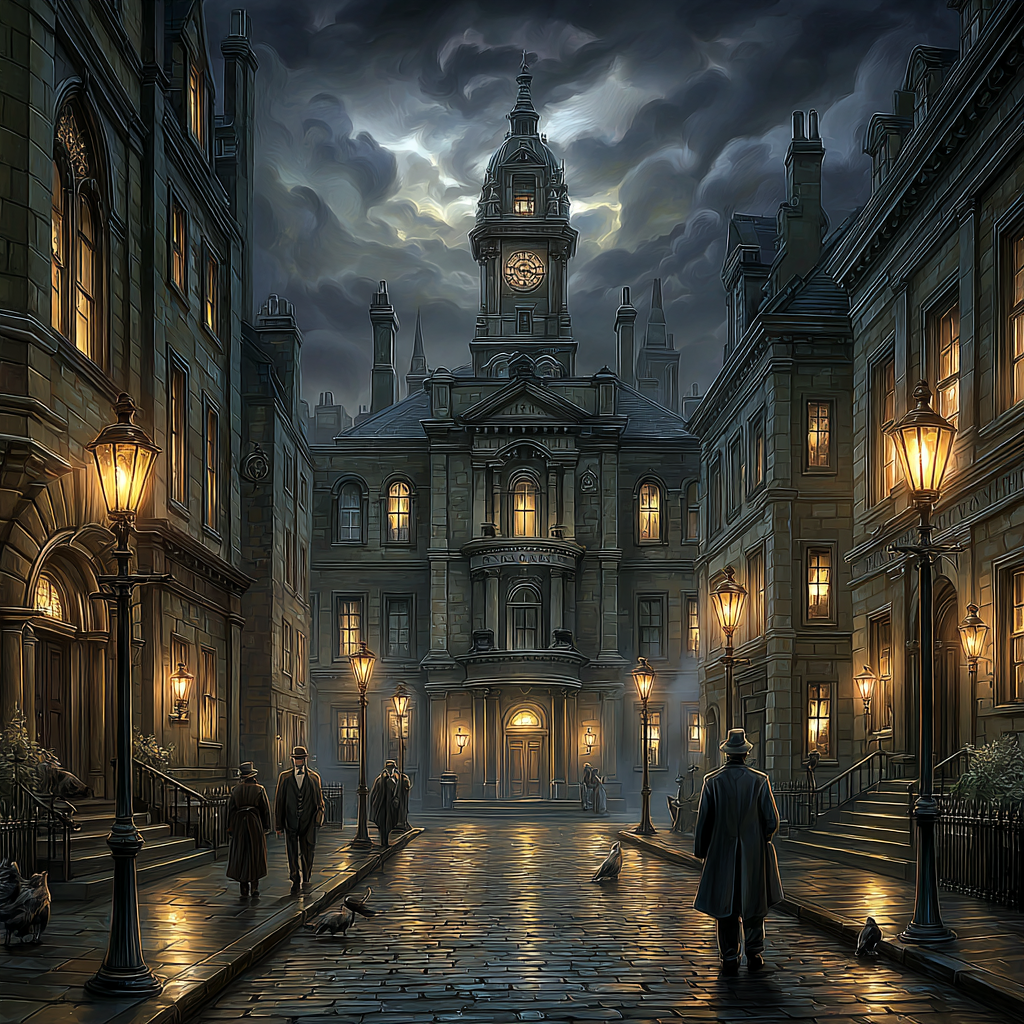
Overview & Character The Central Civic Ward is where Gearhaven governs itself — or where it performs the act of governing itself, which is related but not identical. The stone civic halls are wide and permanent and built to suggest that the decisions made within them are equally so. The streets are broad. The buildings are heavy. The atmosphere has the quality of institutional weight — the accumulated gravity of a place where things are officially decided, officially recorded, and officially filed. Whether any of that activity reflects what is actually happening in the city is a separate question that the Central Civic Ward does not encourage you to ask on its premises.
The Fog & Elevation The Central Civic Ward sits on the central plateau — above the lower basin fog, below the clear air of the Terraces and Enclave. On most mornings the Ward is in the upper reaches of the fog, which gives its stone buildings a quality of looming that may or may not be intentional. City Hall emerges from the morning grey with the regularity of a civic obligation.
Who Lives & Works Here Government officials. Legal advocates and their staff. The civic machinery of a city of 215,000 — clerks, administrators, officers of the court, the functionaries without whom nothing official happens and with whom nothing interesting does. The population runs to around 14,000 to 17,000, predominantly employed in civic and legal functions. The income range is the skilled and civic tier — 220 to 480 Meridians per year.
Notable Locations & Named Streets City Hall, above whose entrance the national motto — Endure. Improve. Remember. — is inscribed in stone. The Courts, where Gearhaven’s legal disputes are adjudicated with varying degrees of impartiality. The Opera House, which is the Ward’s concession that life is not entirely administration — Gearhaven’s primary venue for cultural prestige, occupying a central position in the city’s institutional life for reasons that have as much to do with influence as with art. Watch HQ occupies a solid building on a central street — the administrative centre of the Gearhaven Public Watch. The Convention Centre hosts the Brightmere Harvest Exhibition and other civic gatherings. Assay Lane, in the Notarial Quarter adjacent to the Ward, contains a stone building with brass signage at number seven.
Food, Music & Culture Opera. Orchestra. Military bands on Founders’ Day and formal occasions. National hymns performed with institutional seriousness. The music of the Central Civic Ward represents authority and order — not because anyone has decreed it should, but because that is what the district attracts and produces. The food runs to formal dining for those conducting business and to unremarkable canteens for those who work the machinery of it. The Gearhaven Chronicle has its offices in the adjacent Canal Ward; its institutional relationships with the Civic Ward are conducted through the pneumatic dispatch system.