
Mercantile Canal Ward
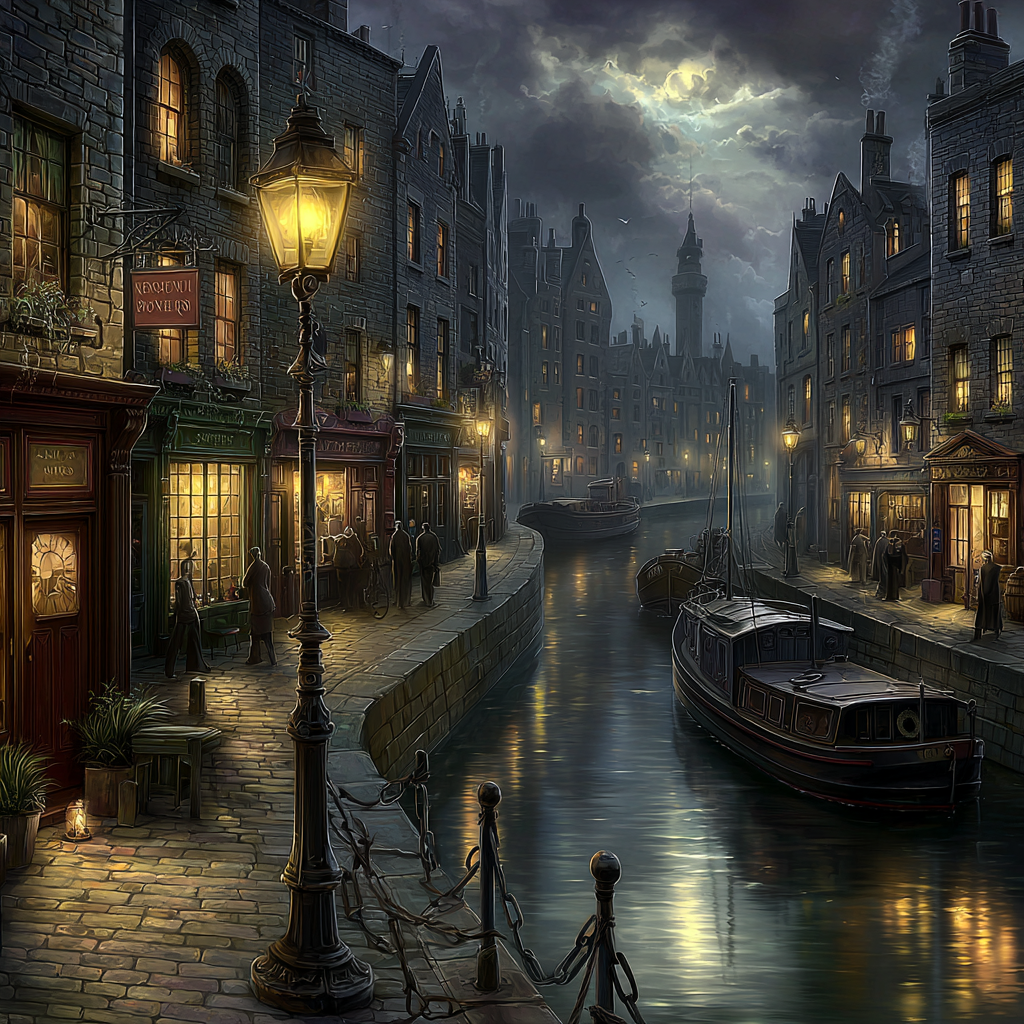
MERCANTILE CANAL WARD
Ledger Lane · The Canal
Overview & Character The Mercantile Canal Ward is where Gearhaven’s commerce is recorded, argued over, financed, reported, and occasionally stolen. The canal runs along its eastern edge, the lock gates connecting the city’s internal waterway to the outer shipping routes. The warehouses are large and functional. The offices are narrow and busy. The trade houses along Canal Street have been in operation, some of them, since before the reconstruction period. The Ward has the quality of a place where money moves rather than rests — transactional, alert, internationally influenced in ways that the more inward-looking upper districts are not. The food reflects this. So does the music.
The Fog & Elevation The Canal Ward occupies a mid-lower elevation along the eastern side of the city. The canal itself moderates the fog to some degree — the water keeps the air moving — but the morning fog sits in the side streets off the main canal corridor. Wharf Approach, in particular, has a quality of grey-white in the early morning that makes it a good place to observe without being observed.
Who Lives & Works Here Merchants, trade brokers, newspaper staff, shipping agents, and the various legal and financial professionals who service the trade economy. The population is around 18,000 to 22,000, earning in the mid-tier range of 220 to 480 Meridians per year. The Canal Ward is economically mixed in ways that the more stratified upper districts are not — proximity to trade means proximity to money of various origins and legitimacy, and the Ward has learned to ask only the questions that require an answer.
Notable Locations & Named Streets Canal Street runs the length of the Ward’s commercial core, lined with factoring houses and trade offices. The Lock Gates are both functional infrastructure and the symbolic entrance to Gearhaven’s mercantile life — new arrivals passing through them are entering the city’s economic centre as much as its physical one. The Chronicle Offices are here, their pneumatic connections running to institutions across the city. Inkwell Street, at the far end, contains a narrow-fronted property with no sign and a proof press visible through the window. Assay Lane, in the adjacent Notarial Quarter, holds the city’s legal record-keeping. Fenn’s coffee room on Wharf Approach opens early and closes late and maintains corner tables suitable for extended observation. Cutler’s Lane contains a lock-up with a green door.Food, Music & Culture Spiced canal prawns and smoked river eel. Imported citrus compote from Avelore and the Karthal Coast ports. The food of the Canal Ward reflects the shipping routes that supply it — more international than any other district in Gearhaven, more varied, occasionally excellent. The music follows the same pattern — sailor songs and dockside bands, market fiddles, traveling musicians who have come through the lock gates from other cities and other countries. Many foreign influences, none of them permanent, all of them leaving something behind.